100 Top eCommerce Sites in India — The Ultimate 2026 List
- October 19, 2025
- 0

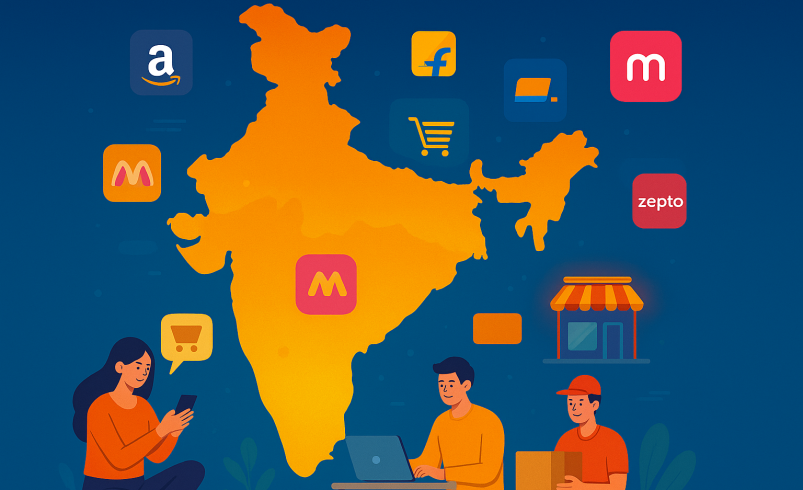
India’s online retail market is massive, fast-moving, and extremely diverse. From global giants like Amazon to homegrown unicorns (Flipkart, Meesho), specialized beauty and baby stores (Nykaa, FirstCry), hyperlocal grocery quick commerce (Blinkit, Zepto), to B2B marketplaces (IndiaMART), the ecosystem now supports hundreds — if not thousands — of retail destinations. This guide compiles the 100 top e-commerce sites in India across categories and formats so entrepreneurs, marketers, and shoppers can quickly find the platforms that matter. I’ve prioritized traffic, brand footprint, vertical relevance, and market impact based on industry sources and traffic studies. For snapshot metrics and traffic ranking, sources like SEMrush (top retail websites), AfterShip’s India store directory, and industry roundups were used to validate selections.
Why a list of 100? Because India’s online economy isn’t just “top 10” — it’s an archipelago of marketplaces, niche storefronts, quick commerce apps, B2B hubs, and regional champions. Sellers need to understand where customers discover products; marketers need to plan channel mixes beyond the obvious platforms; and product teams need to know where competition and demand live. This article does three things: (1) provides a vetted list of 100 e-commerce sites grouped by role and vertical, (2) explains how the list was compiled so you can adapt it to your business, and (3) gives tactical SEO and marketplace growth tips tailored for the Indian market.
India’s digital commerce story is unique. A huge addressable market (hundreds of millions of smartphone users), rapid adoption of UPI & digital payments, and a growing middle class have combined to create a market where both mega-marketplaces and niche specialists coexist profitably. Important trends shaping the landscape:
From a seller’s perspective, the implication is clear: the choice of platforms should be strategic — balancing scale, margin, category fit, logistics complexity, and marketing costs. From an SEO and content marketer’s perspective, listing your product across the right combination of marketplaces and maintaining unique, optimized content drives both discovery and conversion.
Transparency matters. A curated list is only useful when the selection criteria are clear. I used a multi-factor approach combining quantitative signals and qualitative judgment:
What we did not include: purely affiliate/price-comparison shells with negligible direct commerce activity, long-defunct marketplaces, or extremely small mom-and-pop webstores without measurable traffic or seller programs. The goal was to list platforms that either (a) generate significant shopper traffic, (b) are category leaders, or (c) represent strategic channel opportunities for sellers.
Here I introduce the top 10 sites that matter for reach and category influence in India. These platforms are the starting point for most sellers and the focal points for many category marketing plans. The order below reflects a mix of traffic, market share, and vertical leadership (not a strict numerical rank):
1. Amazon India (amazon.in) — The global giant with deep logistics, Prime membership benefits, and a vast seller ecosystem. Amazon’s category breadth and frequent promotional cycles make it the top acquisition channel for many brands. SEMrush traffic numbers place Amazon.in as the most visited retail site in India.
2. Flipkart (flipkart.com) — Flipkart remains Amazon’s biggest homegrown competitor, with strong electronics and mass retail presence. Flipkart’s seller programs, vendor relationships and aggressive festival sales keep it central to any India marketplace strategy. Industry lists consistently show Flipkart as the second most visited retail site in India.
3. Myntra (myntra.com) — Fashion specialist known for high engagement on apparel and footwear. For fashion brands, Myntra’s curation, private labels, and marketing partnerships make it a key channel.
4. Meesho (meesho.com) — Social commerce leader that democratized marketplace selling via resellers and social channels. Meesho is critical for sellers aiming at tier-2/3 markets and price-sensitive categories.
5. Nykaa (nykaa.com) — Beauty and cosmetics specialist with an omnichannel presence; Nykaa dominates online beauty sales and is a benchmark for beauty category marketing.
6. AJIO (ajio.com) — Reliance-backed fashion and lifestyle marketplace — important for brands in mid-market apparel and trendy categories.
7. JioMart (jiomart.com) — Reliance Retail’s commerce engine targeting groceries and essentials, increasingly important due to retail network and price competitiveness.
8. IndiaMART (indiamart.com) — The leading B2B marketplace connecting manufacturers, suppliers, and buyers across categories — essential for wholesale and bulk sellers.
9. Snapdeal (snapdeal.com) — A long-standing Indian marketplace that still retains relevance in low-to-mid price segments and value goods.
10. FirstCry (firstcry.com) — Dominant in baby and kids’ products; a must-consider for brands in babycare, toys, and maternity categories.
These leaders are corroborated across multiple industry roundups and traffic directories; they form the core of the Indian ecommerce topology sellers typically map first.
Beyond the top 10, India’s ecommerce landscape opens into a vast ecosystem of multi-category marketplaces that cater to every possible product niche — from home décor and electronics to healthcare and automotive. These platforms may not match Amazon or Flipkart in total traffic, but they command strong loyalty and niche dominance within specific buyer segments. Let’s explore some of the top contenders from rank 11 to 30 that play pivotal roles in shaping online commerce in India.
11. Tata CLiQ (tatacliq.com) — Backed by the Tata Group, Tata CLiQ is known for its premium brand experience and authenticity assurance. It focuses heavily on branded fashion, electronics, and lifestyle goods, offering a trusted online experience that resonates strongly with India’s upper-middle-class consumers.
12. Paytm Mall (paytmmall.com) — Although its market share has fluctuated, Paytm Mall remains a relevant platform integrated with Paytm’s payment ecosystem. It’s particularly valuable for sellers leveraging Paytm’s massive mobile user base and UPI ecosystem.
13. Pepperfry (pepperfry.com) — India’s top destination for furniture and home décor, Pepperfry provides both an online and offline experience. Their “studios” allow customers to touch and feel products before ordering, making it one of the most trusted home shopping sites.
14. Lenskart (lenskart.com) — Revolutionizing the eyewear market, Lenskart offers prescription glasses, sunglasses, and contact lenses with virtual try-ons and home eye tests — a perfect blend of ecommerce and health tech.
15. BigBasket (bigbasket.com) — A pioneer in India’s online grocery segment, BigBasket dominates in fresh produce and household essentials. Now under the Tata umbrella, it has a strong presence in major metros and Tier-2 cities.
16. Blinkit (blinkit.com) — Formerly known as Grofers, Blinkit transformed into a quick commerce giant, promising grocery and essentials delivery within minutes. The model’s success underlines the changing consumer preference for instant gratification.
17. Zepto (zepto.com) — Competing head-to-head with Blinkit, Zepto captured urban markets with its ultra-fast 10-minute deliveries. It’s also expanding into electronics and non-grocery essentials, signaling a broadening of the quick-commerce model.
18. Swiggy Instamart (swiggy.com/instamart) — Initially a food delivery app, Swiggy’s quick commerce arm now contributes massively to its revenue. Instamart delivers groceries, snacks, and household items across urban India with astonishing speed.
19. Zomato Market (zomato.com/market) — Following Swiggy’s lead, Zomato’s grocery delivery segment serves urban households looking for reliable, fast access to essentials. It’s smaller than Swiggy Instamart but rapidly growing.
20. 1mg (1mg.com) — In the healthcare and pharma niche, 1mg is the go-to platform for ordering medicines online, booking lab tests, and consulting doctors. It’s backed by the Tata Group and has become synonymous with online healthcare in India.
21. Pharmeasy (pharmeasy.in) — Another healthcare ecommerce leader, Pharmeasy specializes in medicine delivery and diagnostic services. It gained immense popularity during and after the pandemic due to reliable last-mile delivery.
22. NetMeds (netmeds.com) — Supported by Reliance Retail, NetMeds competes strongly with 1mg and Pharmeasy, focusing on nationwide medicine distribution and health product delivery.
23. Croma (croma.com) — A Tata enterprise and a leading electronics retail chain, Croma’s online platform offers a vast range of gadgets and appliances, often paired with strong post-sale support.
24. Reliance Digital (reliancedigital.in) — One of India’s largest consumer electronics destinations, Reliance Digital combines a powerful offline presence with a robust ecommerce platform.
25. Shopclues (shopclues.com) — Once a leading discount marketplace, Shopclues continues to serve budget-conscious shoppers across categories, maintaining relevance in smaller cities.
26. Snapmint (snapmint.com) — A unique marketplace offering BNPL (Buy Now, Pay Later) options, Snapmint lets users shop from multiple categories while splitting payments — bridging fintech and retail.
27. Craftsvilla (craftsvilla.com) — Focused on ethnic wear and handicrafts, Craftsvilla supports local artisans and provides a platform for traditional Indian goods.
28. Urban Ladder (urbanladder.com) — Competing with Pepperfry, Urban Ladder specializes in furniture and home design, targeting upper-middle-class urban homes.
29. Ferns N Petals (fnp.com) — A leader in gifting and floral deliveries, Ferns N Petals (FNP) has expanded into personalized gifting and event decor, becoming a household name for celebrations.
30. Bewakoof (bewakoof.com) — A youth-oriented fashion brand and ecommerce site known for trendy, quirky apparel and a loyal Gen Z following.
The next 30 sites specialize in vertical commerce — platforms built to dominate one category rather than serve all. Their success lies in hyper-focused branding, deep product expertise, and targeted customer experiences.
Here are some of India’s most powerful vertical ecommerce brands:
31. Mamaearth (mamaearth.in) – Natural skincare and babycare products brand that grew through influencer marketing and content-driven SEO.
32. The Man Company (themancompany.com) – Premium grooming brand for men, offering everything from beard oils to fragrances.
33. Wow Skin Science (buywow.in) – Known for toxin-free shampoos and skincare products, heavily driven by online D2C sales.
34. Sugar Cosmetics (sugarcosmetics.com) – A fast-growing cosmetics brand with vibrant marketing and strong female following.
35. Purplle (purplle.com) – Beauty and cosmetics marketplace competing closely with Nykaa.
36. Boat Lifestyle (boat-lifestyle.com) – India’s top audio brand selling headphones, earbuds, and wearables.
37. Noise (gonoise.com) – Competes with Boat in smartwatches and wearables, emphasizing innovation and youth-centric design.
38. Realme (realme.com/in) – Smartphone and electronics D2C store with massive traffic from loyal users.
39. Mi Store (store.mi.com/in) – Xiaomi’s official platform offering smartphones and smart home devices.
40. Samsung India Store (samsung.com/in) – Global electronics giant’s Indian portal catering to direct online buyers.
41. FirstCry (firstcry.com) – Already mentioned in top 10, but notable here for being the largest babycare platform.
42. Hopscotch (hopscotch.in) – Stylish baby and kids fashion platform with curated selections.
43. BabyChakra (babychakra.com) – Focused on baby wellness and community-driven advice along with product sales.
44. Bigsmall (bigsmall.in) – Unique gifts and novelty item store, perfect for quirky shoppers.
45. Printo (printo.in) – Custom printing platform for business cards, gifts, and corporate branding.
46. CaratLane (caratlane.com) – Leading online jewelry store (owned by Titan), blending tech with fine craftsmanship.
47. Bluestone (bluestone.com) – Competes with CaratLane in premium online jewelry, offering try-at-home experiences.
48. Tanishq (tanishq.co.in) – Titan’s official jewelry brand store, offering certified gold and diamond jewelry.
49. HealthKart (healthkart.com) – Fitness and nutrition marketplace focusing on protein, supplements, and sports products.
50. Cultsport (cultsport.com) – D2C sportswear and fitness gear platform tied to CureFit.
51. Decathlon (decathlon.in) – International sports goods giant with localized ecommerce operations in India.
52. Zivame (zivame.com) – India’s leading lingerie and intimate wear destination for women.
53. Clovia (clovia.com) – Competes with Zivame in innerwear and sleepwear, offering size customization and discounts.
54. Nykaa Fashion (nykaafashion.com) – Nykaa’s separate platform for fashion, distinct from its beauty vertical.
55. Tata 1mg (1mg.com) – Mentioned earlier but worth noting again for its influence in the health ecommerce niche.
56. Apollo 24/7 (apollo247.com) – Hospital-backed health ecommerce and consultation platform.
57. Big Bazaar Online (bigbazaar.com) – Once a retail giant, now rebuilding its online presence post-acquisition changes.
58. Spencer’s Online (spencers.in) – Hypermarket chain with grocery and lifestyle delivery across metros.
59. More Retail (moreretail.in) – Reliance-backed grocery chain expanding its ecommerce infrastructure.
60. Grofers (grofers.com) – Now Blinkit, but legacy users still visit its old domain for grocery access.
These platforms underline India’s category maturity — where online buyers don’t just shop on “one-size-fits-all” marketplaces but prefer vertical specialization for quality, brand trust, and curation.
India’s ecommerce success story doesn’t stop with consumer marketplaces — B2B, regional, and classified platforms play a major role in connecting local sellers and buyers, facilitating trade across industries, and supporting small and medium businesses. These sites power both the digital wholesale market and the hyperlocal retail economy.
Here are some of the most impactful platforms in this category:
61. TradeIndia (tradeindia.com) – One of India’s largest B2B marketplaces, TradeIndia connects millions of manufacturers, exporters, and suppliers across product categories. It’s a go-to for SMEs looking for national exposure.
62. IndiaMART (indiamart.com) – Already covered in the top 10, but it’s worth emphasizing again. IndiaMART is the benchmark for B2B ecommerce in India, with over 100 million buyers and suppliers.
63. Udaan (udaan.com) – A unicorn startup focused on wholesale trade, Udaan enables retailers and wholesalers to buy directly from manufacturers. It’s revolutionizing India’s B2B supply chain.
64. Moglix (moglix.com) – A B2B platform specializing in industrial tools, MRO supplies, and safety equipment. It’s transforming how manufacturers procure industrial goods.
65. Justdial (justdial.com) – Originally a business directory, Justdial now supports classified ads and lead generation for businesses across India, acting as a bridge between offline and online commerce.
66. OLX India (olx.in) – The largest online classifieds platform, allowing users to buy and sell second-hand goods. OLX is crucial for C2C ecommerce and recycling economy growth.
67. Quikr (quikr.com) – Competes with OLX, offering classified listings for jobs, homes, services, and goods. Its localized services make it popular in tier-2 and tier-3 cities.
68. Indiabizforsale (indiabizforsale.com) – A unique B2B platform for business sales, investments, and franchise opportunities, connecting entrepreneurs and investors.
69. ExportersIndia (exportersindia.com) – Focused on export trade, this platform connects Indian exporters with international buyers across 50+ countries.
70. Alibaba India (alibaba.com/countrysearch/IN) – Though a global platform, many Indian suppliers operate here to access international buyers.
71. Sulekha (sulekha.com) – Known for local service listings, Sulekha connects users with service providers (plumbers, tutors, repairers) and indirectly supports ecommerce transactions.
72. ClickIndia (clickindia.com) – A versatile classifieds portal for jobs, property, vehicles, and products.
73. Indiamarketplaces (indiamarketplaces.com) – A curated B2B directory showcasing verified suppliers and product categories for trade buyers.
74. TradeFord India (india.tradeford.com) – Another B2B trade portal that helps small exporters gain visibility.
75. IndustryBuying (industrybuying.com) – Focused on industrial and business supplies, this ecommerce platform serves enterprises and bulk buyers.
76. Tolexo (tolexo.com) – Once associated with IndiaMART, Tolexo was designed as a B2B retail marketplace, connecting SMEs with tools and machinery vendors.
77. Equipage (equipage.in) – Specializes in heavy machinery and industrial equipment sales, serving construction and manufacturing firms.
78. Shopkirana (shopkirana.com) – A regional B2B ecommerce startup empowering kirana stores (local shops) to buy directly from FMCG brands.
79. Jumbotail (jumbotail.com) – Another B2B marketplace for kirana stores, providing supply-chain logistics and inventory financing.
80. DealShare (dealshare.in) – Blends B2C and B2B models, offering bulk deals on groceries and daily essentials, focusing on middle-income and regional buyers.
These platforms highlight how digital India extends beyond consumers — small businesses, shop owners, and local traders are equally vital parts of the ecommerce revolution.
Quick commerce has become one of India’s most explosive ecommerce segments. In this category, speed is everything — deliveries under 30 minutes, hyperlocal fulfillment centers, and AI-driven inventory management are the defining trends.
Here are the leaders driving this revolution:
81. Blinkit (blinkit.com) – India’s most recognized instant delivery platform, offering groceries, personal care, and household items delivered in minutes.
82. Zepto (zepto.com) – With its signature 10-minute delivery promise, Zepto’s dark-store model has redefined urban convenience.
83. Swiggy Instamart (swiggy.com/instamart) – Integrated within the Swiggy app, it provides an extensive inventory of groceries and daily use items.
84. Dunzo (dunzo.com) – Once synonymous with urban deliveries, Dunzo now focuses on last-mile logistics for partners like Reliance and local merchants.
85. BigBasket Now (bigbasket.com) – Tata’s express grocery delivery arm, offering deliveries within an hour in major metros.
86. Zomato Market (zomato.com/market) – Expanding Zomato’s core food-delivery business into the grocery segment.
87. BB Daily (bbdaily.com) – Subscription-based delivery service from BigBasket, offering daily milk and essentials before breakfast hours.
88. MilkBasket (milkbasket.com) – A micro-delivery app delivering fresh milk, bakery, and groceries early morning.
89. Porter (porter.in) – Not a direct ecommerce site but a logistics and hyperlocal delivery platform powering on-demand movement of goods.
90. Shadowfax (shadowfax.in) – A delivery partner platform that powers logistics for major ecommerce players including Flipkart, Meesho, and BigBasket.
The quick-commerce race is more than just about groceries — it’s reshaping consumer expectations, delivery logistics, and fulfillment strategy across ecommerce categories.
The final 10 ecommerce platforms represent India’s rising stars — innovative, niche, and tech-driven brands that are quickly scaling thanks to social media virality, influencer culture, or sustainable business models.
91. The Souled Store (thesouledstore.com) – A pop-culture fashion brand known for superhero and movie-themed merchandise.
92. Urbanic (urbanic.com/in) – Fast fashion platform targeting Gen Z consumers with global designs and affordable pricing.
93. House of Blouse (houseofblouse.com) – Customizable women’s fashion boutique that combines traditional and modern designs.
94. Nykaa Man (nykaaman.com) – Nykaa’s dedicated platform for men’s grooming and fashion products.
95. VegNonVeg (vegnonveg.com) – India’s first sneaker-focused ecommerce store, popular among sneaker enthusiasts.
96. Headphone Zone (headphonezone.in) – Premium audio equipment ecommerce site serving audiophiles across India.
97. Faballey (faballey.com) – Trendy women’s fashion brand that grew rapidly through digital-first marketing.
98. Licious (licious.in) – India’s leading fresh meat and seafood delivery platform with a cold-chain network ensuring freshness.
99. Blue Tokai (bluetokaicoffee.com) – Premium coffee ecommerce platform offering freshly roasted beans and brewing equipment.
100. The Whole Truth Foods (thewholetruthfoods.com) – A clean-label food brand promoting healthy snacking and ingredient transparency.
These emerging names highlight the next wave of ecommerce growth in India — driven by authenticity, innovation, and customer-centric storytelling.
Choosing where to sell online in India can feel overwhelming. With over 100 major platforms and countless niche options, sellers need a framework to decide. Here’s a simple, four-step strategy to make it easier:
The most successful sellers in India use a multi-channel approach — they list on big platforms for reach, and build niche or D2C stores for loyalty.
In India’s highly competitive ecommerce space, visibility is everything. Sellers and brands who master SEO (Search Engine Optimization) and marketplace optimization can outperform even larger players. The beauty of ecommerce SEO lies in blending search intent, keyword strategy, and buyer psychology — whether your product is on Amazon, Flipkart, or your own D2C site.
Here’s a deep dive into actionable SEO and growth strategies that work in India’s market:
Each marketplace has its own search algorithm. On Amazon, it’s called A9, while Flipkart and Myntra have their proprietary ranking systems. To rank higher, sellers must:
More than 80% of ecommerce traffic in India comes from smartphones. Optimize your listings and D2C sites for mobile devices:
India’s linguistic diversity is massive. Sellers can tap into new audiences by localizing content:
Social validation drives Indian shoppers. Combine SEO and influencer marketing to build trust:
| Optimization Factor | Description | Importance |
|---|---|---|
| Title | Use top keywords naturally within 80–120 characters | ⭐⭐⭐⭐⭐ |
| Description | Include benefits, materials, usage, and emotional appeal | ⭐⭐⭐⭐ |
| Images | Use 5+ high-quality images with zoom and 360° views | ⭐⭐⭐⭐⭐ |
| Bullet Points | Highlight quick benefits (waterproof, eco-friendly, warranty) | ⭐⭐⭐⭐ |
| FAQs | Address common objections to boost conversion rate | ⭐⭐⭐⭐ |
Promote listings via blogs, Quora, Reddit, and Indian social channels like ShareChat or Moj. Quality backlinks and shares signal credibility to search engines.
The golden rule? Write for people, optimize for algorithms. That’s how you build sustainable ecommerce visibility in India.
SEO isn’t just about keywords — it’s about structured data and technical precision. Every successful seller follows a data-first approach when uploading and managing product feeds.
If you sell across multiple marketplaces, your product feed (the data file containing SKU, price, inventory, and attributes) must be consistent. A mismatch between Amazon and Flipkart listings confuses customers and lowers trust. Use feed management tools to:
Schema markup helps search engines understand your pages better. Implement Product, Review, and BreadcrumbList schema to enhance your rich snippets in Google search results — increasing click-through rates.
Rename product images before uploading (e.g., “mens-leather-wallet-brown.jpg” instead of “IMG001.jpg”) and add ALT text for every image to improve visibility in image searches.
Use Google Search Console to monitor for indexing or structured data errors. Pages with broken structured data may not display rich snippets like ratings or pricing.
Run mobile speed audits regularly using PageSpeed Insights or GTmetrix. In India, many users access ecommerce platforms on 3G/4G networks, so keep your D2C website under 2.5 seconds load time for better conversions.
Voice search queries like “Alexa, where can I buy wireless earbuds under ₹1000?” are rising fast. Include natural, question-based phrases in product descriptions and FAQ sections.
If you own a physical store, integrate Google Local Inventory Ads. They show your nearby inventory to users searching “near me” queries, merging online visibility with offline sales.
This technical hygiene ensures that your products are searchable, credible, and conversion-ready across all major platforms.
Customer experience defines ecommerce success in India. Even with perfect SEO, poor delivery or return handling can kill repeat business.
Indian consumers are cautious buyers. A no-hassle return policy is a major conversion booster. Ensure your listings mention:
Send follow-up emails or WhatsApp messages asking for feedback. Personal touches help build loyalty.
A few bad reviews won’t ruin your brand — ignoring them will. Respond quickly, offer replacements or apologies, and show genuine care. Potential buyers often read reviews to gauge customer service quality.
With India’s diverse languages, offering customer support in Hindi, Tamil, Bengali, or Telugu can dramatically improve satisfaction and reach.
In a market built on trust and convenience, excellent fulfillment and support can make a small seller outperform even well-funded competitors.
To grow effectively, sellers must track key performance indicators (KPIs). Numbers don’t lie — they tell you what’s working and what’s not.
| KPI | Description | Benchmark (India) |
|---|---|---|
| CTR (Click-Through Rate) | % of people who click your product from search results | 2–5% |
| Conversion Rate (CR) | % of visitors who complete a purchase | 1.5–3% (avg), higher for niche |
| Average Order Value (AOV) | Avg spend per customer per order | ₹1,000–₹3,500 |
| Customer Acquisition Cost (CAC) | Cost to acquire one buyer | ₹100–₹250 (depends on niche) |
| Repeat Purchase Rate (RPR) | % of returning buyers | 25–40% (target) |
| Refund/Return Rate | % of orders returned by customers | <10% ideal |
| Customer Lifetime Value (CLV) | Net value of a customer over time | Should exceed 3× CAC |
Tracking these metrics monthly helps identify whether your efforts in SEO, logistics, or marketing are actually paying off.
The Indian ecommerce market is entering its most exciting phase ever. By 2027, it’s expected to cross $150 billion, driven by deeper rural penetration, AI-driven personalization, and the dominance of quick commerce. Consumers are becoming smarter, demanding faster deliveries, sustainable products, and brand authenticity.
For sellers, the takeaway is simple:
The next wave of winners will be brands that don’t just sell online — they’ll connect, personalize, and innovate.
1. Which is the biggest ecommerce site in India?
Amazon India currently holds the top spot in terms of traffic, followed closely by Flipkart.
2. What is the fastest-growing ecommerce category in India?
Quick commerce (grocery delivery), fashion, and beauty segments are witnessing explosive growth.
3. How can small sellers compete with big brands?
By focusing on niche products, using SEO smartly, and providing exceptional customer service.
4. Which ecommerce platforms are best for handmade or local goods?
Craftsvilla, Etsy India, and Meesho are great for local and handcrafted products.
5. Is it better to sell on marketplaces or build your own D2C website?
Both. Start with marketplaces for visibility, then use D2C for brand control and higher margins.